It looks like in some countries they are seriously using robots as school teachers. I'm not sure what to think. I'm sure there are pros and cons to everything. It's amazing how life-like these can be. I can also picture some kids finding them a little scary. http://www.telegraph.co.uk/technology/5311151/Robot-teacher-conducts-first-class-in-Tokyo-school.html

Wednesday, March 7, 2012

Monday, March 5, 2012
A few articles of interest for today:
I found these news articles online today:
Social Deficits in Autism Linked to "Mirror Neuron" System:
http://psychcentral.com/news/2012/03/05/social-deficits-in-autism-linked-to-mirror-neuron-system/35591.html Not sure what to think of this. I am not a Neurologist, but thought it's worth the read.
Autism isn't always obvious, but it's always there:
http://www.therecord.com/whatson/artsentertainment/article/681776--autism-isn-t-always-obvious-but-it-s-always-there
‘Ground breaking' new ministry caters to families with Autistic children:
http://www.hometownlife.com/article/20120304/NEWS15/203040439 This may be of interest to Catholics who struggle with the idea of taking their Autistic child to Mass.
Social Deficits in Autism Linked to "Mirror Neuron" System:
http://psychcentral.com/news/2012/03/05/social-deficits-in-autism-linked-to-mirror-neuron-system/35591.html Not sure what to think of this. I am not a Neurologist, but thought it's worth the read.
Autism isn't always obvious, but it's always there:
http://www.therecord.com/whatson/artsentertainment/article/681776--autism-isn-t-always-obvious-but-it-s-always-there
‘Ground breaking' new ministry caters to families with Autistic children:
http://www.hometownlife.com/article/20120304/NEWS15/203040439 This may be of interest to Catholics who struggle with the idea of taking their Autistic child to Mass.
Spring in Turkey
This is an old (10th century) Armenian monastery on an island in Lake Van (present day Turkey). This photo appears to have been taken in the Spring. Akhtamar Island on Lake Van with the Armenian Cathedral of the Holy Cross
by: gozturk on Wikimedia Commons 2009
 Akhtamar Island on Lake Van with the Armenian Cathedral of the Holy Cross
by: gozturk on Wikimedia Commons 2009
On the shores of the Caspian Sea:
Baku is the largest city in Azerbaijan. It sits on the coast of the Caspian Sea to the north of Iran.

Colorful development in Baku,
by: teuchterlad on Wikimedia Commons 2009

The Flame Towers in Baku,
by: Elkhan Jafarov on Wikimedia Commons 2011

Baku at Night
by: Gulustan on Wikimedia Commons 2011

Old City in Baku, Azerbaijan
by: Samir Rəsulov on Wikimedia Commons 2011

Colorful development in Baku,
by: teuchterlad on Wikimedia Commons 2009

The Flame Towers in Baku,
by: Elkhan Jafarov on Wikimedia Commons 2011

Baku at Night
by: Gulustan on Wikimedia Commons 2011

Old City in Baku, Azerbaijan
by: Samir Rəsulov on Wikimedia Commons 2011
Wednesday, February 29, 2012
Bullying:
(This I wrote for an upcoming newsletter on bullying. I may have covered some of this elsewhere in this blog but I will post a copy on here anyway.)
What can be more "all-American" than the 1983 movie "The Christmas Story" starring Peter Billingsley as "Ralphie"? To this day it plays back-to-back all day every Christmas on cable TV. Like many movies there are several sub-plots. One of the most memorable (besides the leg lamp) is when Ralphie finally stands up to his bully. The bully in this movie, Scut Farkus, fits most of the stereotypes of a schoolyard bully. He's big, has ruddy cheeks, and is not the most popular guy outside his little entourage. Of course Ralphie was an otherwise normal kid with rather thick glasses. The solution seemed rather simple. One day, after Ralphie had enough he finally stood up to the bully (to the point of overkill) and his mother had to pull him off. Ralphie of course did not get in trouble and that was the end of the bullying topic for that movie. Ralphie (Peter Billingsley) is all grown up now.
It would be nice if every bullying story came to such a perfect, all-American storybook ending as is frequently promised. The good guy wins and finishes off his school years happily (and popularly) ever after. I have heard many stories like this from people. I suspect that most people were bullied at some point in their lives and many claimed that they were just too nice and needed to build the adrenaline to defend themselves. After that they went on to live a normal childhood or adolescence. Of course people can also embellish stories. In real life things are not always that simple. I know because I have experienced my share of bullying. While I am on the Autistic spectrum nobody knew much about it back when I was in school and many saw me as "normal but eccentric". The conventional advice I tended to get from adults was well-meaning, but overly simplistic. It was usually along the lines of: "If he hits you, just hit him back." or "If they make fun of you, just ignore them or tell them off". Even some of the nuns in school would tell me to stand up for myself, but I knew that if I did I would be in just as much trouble if not more than the perpetrator, especially if my reaction was delayed. "Who started it?" would be a matter of my word against theirs and that of their friends. I wasn't the tallest kid but I was rather sturdy. It's not like I never thought of defending myself before. I detested violence, and while I always had a long fuse, I did get angry (just never at the appropriate moment). Adrenaline always came a few minutes too late for me. In my logical/analytical mind I would always have to think of consequences before I acted. For most people that would be a good trait, but I was too much the other extreme. I always feared that I would get suspended. Also people never seemed to understand that bullies are never alone. Even the victim is physically bigger there is usually a network of people who assist in retaliation. I was generally an independent type who had little use for group dynamics. Also, many times the bullies were popular, charming, or had well connected families. In real life bullies are rarely dumb, and they seem to intuitively know what they can and can't get away with. I even took Karate for a while, which in the 1980's was the fad way of dealing with bullies. I did OK in the sport, but it still didn't help. As with many on the Autistic spectrum I had slow processing which is is an issue in both anticipating trouble in the sometimes brief period of escalation and then reacting at the appropriate time.
"Boys will be boys" is another issue which can be a problem. I can recall times where I was having a problem and adults seemed sympathetic to my side at least on the surface, but then I would overhear them talking about the bully in terms of "Isn't he bold, isn't he a character" in other words they were not sincere and the bully, even if he may get an occasional detention, can sense that others find it "cute". Among peers there would always be "sympathetic" girls who would say "Just ignore him, he's a loser." only to end up on a date with the bully a week later. I understand that many boys and even some girls like to play rough and many adults overlook things until it is too late. People need to know the difference between "normal boy stuff" and bullying. There are many good-intentioned adults who see bullying as a "right of passage" where "a boy becomes a man" after he stands up to his childhood bully. Our culture I feel has romanticized this concept. Many adults feel (at least regarding boys) that by ignoring bullying they are practicing some sort of "tough love" by teaching self-sufficiency. This is a big problem for those with developmental differences. I mean there are always "low class" bullies who will pick on anyone, but most bullies are smart enough to know that some targets are off limits. That would include those with obvious physical handicaps or those who are in special-ed. On the other hand, adults may be more protective of a person with any visible disability or even an invisible one if it is properly labeled. Back then I didn't have any appropriate "labels", except for ADD and few people even knew what that was at the time. I was otherwise a stocky boy- and not just that but an Italian-American boy- not someone who should be acting like a wimp.
Another misconception people have about bullying is that it is mainly an issue for children and teenagers. Bullying is everywhere. Wolves have their own pecking orders, and having had a fish tank for a few years as a kid, it even seems to occur among fish. Even with "good natured" teasing a person is many times being tested subconsciously for where to be placed in the social packing order. It is just as much an issue for girls as it is with boys. Sometimes things get more complicated with girls as bullying can be even more subtle, and while boys may be encouraged to "be a man" and defend themselves, a girl may be encouraged to "be a lady" and politely drop the subject (of course this can also depend on the type of abuse). Bullying can also continue into adulthood- especially in the form of scapegoating. The person can end up being the one to blame for all that goes wrong. In adulthood it is even more often very subtle and covert. There are many different types of bullying and scapegoating as well as different ways in which people can participate. Passive-aggressive bullying is everywhere and very elusive to identify. Gossip and manipulation can do far more damage than most physical bullying. Gossip and prepare the path for a bully by socially isolating or discrediting the victim so that they won't have as many people to back them up. There are even bullies who take on the appearance of do-gooders. It's hard to explain what I mean by this, but sometimes when people think they are saying or doing something for another's "own good" it's really not.
Nowadays, anti-bullying has become a fad. The "coolest" celebrities are jumping on the bandwagon. Whether this is indeed an "epidemic" as the media tends to spin it is subjective, but I do know that it's hardly anything new. Unfortunately I was bullied before "victimhood" became fashionable. Overall, I am pleased that this issue is being addressed publicly, but there is a cynic in me that suspects that some of it can be plastic, especially if one is to read between the lines. Much of the anti-bullying debate is geared to specific groups of people. Two of the most common groups are those with Autism/Aspergers and LGBT... youth. I am not saying this is bad in and of itself. No one should have to take abuse regardless of their neurological status or their sexuality. The problem is with focusing the bullying awareness to select groups. For one thing if people are put into groups where they are perceived as sacred cows, it may stop bullying on the surface but create a resentment (or a begrudgery) which may haunt people in the long run. Also one should not need a label, group identity, or formal diagnosis to be treated fairly or to feel safe.
As for solutions, suggestions and interventions I unfortunately don't have any simplistic "one-size-fits-all" solutions. I can give suggestions. First I would suggest investigating every individual situation and put yourself in the shoes of the people involved. Listen to all sides of the story. Using intuition is imperative. Also aim to create a culture where physical violence is not accepted. I'm not saying that kids can never play like kids or boys can't be boys within reason, but things have to be mutual. If someone seems upset, investigate. Places like rest rooms, locker rooms and showers are common places for bullying in ways both physical and verbal. These environments are often unsupervised and yet when kids are changing clothing or using the bathroom they are most vulnerable and exposed. Kids who are overweight, or have physical differences are especially vulnerable. I'm not saying someone needs to stand over people and watch as I can see how that can be mutually uncomfortable- and creepy, but at least have someone of authority within ear shot in case someone needs help. The cliches of jocks...being jocks... may seem like harmless, typical immaturity, but it can easily escalate to something more serious. I hate to be even this blunt but seriously, these are areas where ugly things can happen.
In the case of people with Autism, it's not impossible that they can learn ways to defend themselves to a point, but remember they may have delayed reaction time and many also have sensory sensitivities. What looks like harmless tickling can be torture to some people. Some can be startled by loud noises and bullies can use that thinking if the person reports it they will look petty. Don't assume that the individual is just overreacting. One reason people on the spectrum can be frequent scapegoats is that they have a harder time getting credibility when they discuss how they are treated. The attitude is sometimes "Who's being bullied?", "Oh him/her, but he/she is a little weird or maybe a little slow..." Then people roll their eyes and don't even want to investigate.
Most of all the people intervening need to be sincere at the deepest level. The moment people find the bad behavior cute or funny, even if the bully gets the worst short-term punishment, kids can intuitively sense if the adults are taking things seriously. In the case of verbal abuse, "Just ignore them." or "You tell them to knock it off!" doesn't always work and suggesting a witty one-line comeback will do little or no good after the fact. It's also important to recognise that a conflict can be more complicated than perceived and not to make the "bully" into the scapegoat. Many times the "good" kids are passively participating knowing that they will come out looking pretty. The so called "bully" is sometimes just doing the dirty work and is being used as a scapegoat themselves. As for supporting anti-bullying laws it is hard to be for or against them without knowing the details. I'm not saying that they can never help, but if they are too simplistic and blind the laws themselves can end up being manipulated and abused. It is most important to prevent bullying by creating a culture of mutual respect for the individual differences of others. In other words fight bullying at it's roots. If we just handle the "incidents" were just fighting the manifestations of the problem and the aggressors will just keep changing their methods and become even more clever. Being approachable is also important. It has to be easy for people to report abuse of all types with the expectations of confidentially and professionalism. It's also important to not jump to conclusions and to handle the situations individually with fairness and empathy.
What can be more "all-American" than the 1983 movie "The Christmas Story" starring Peter Billingsley as "Ralphie"? To this day it plays back-to-back all day every Christmas on cable TV. Like many movies there are several sub-plots. One of the most memorable (besides the leg lamp) is when Ralphie finally stands up to his bully. The bully in this movie, Scut Farkus, fits most of the stereotypes of a schoolyard bully. He's big, has ruddy cheeks, and is not the most popular guy outside his little entourage. Of course Ralphie was an otherwise normal kid with rather thick glasses. The solution seemed rather simple. One day, after Ralphie had enough he finally stood up to the bully (to the point of overkill) and his mother had to pull him off. Ralphie of course did not get in trouble and that was the end of the bullying topic for that movie. Ralphie (Peter Billingsley) is all grown up now.
It would be nice if every bullying story came to such a perfect, all-American storybook ending as is frequently promised. The good guy wins and finishes off his school years happily (and popularly) ever after. I have heard many stories like this from people. I suspect that most people were bullied at some point in their lives and many claimed that they were just too nice and needed to build the adrenaline to defend themselves. After that they went on to live a normal childhood or adolescence. Of course people can also embellish stories. In real life things are not always that simple. I know because I have experienced my share of bullying. While I am on the Autistic spectrum nobody knew much about it back when I was in school and many saw me as "normal but eccentric". The conventional advice I tended to get from adults was well-meaning, but overly simplistic. It was usually along the lines of: "If he hits you, just hit him back." or "If they make fun of you, just ignore them or tell them off". Even some of the nuns in school would tell me to stand up for myself, but I knew that if I did I would be in just as much trouble if not more than the perpetrator, especially if my reaction was delayed. "Who started it?" would be a matter of my word against theirs and that of their friends. I wasn't the tallest kid but I was rather sturdy. It's not like I never thought of defending myself before. I detested violence, and while I always had a long fuse, I did get angry (just never at the appropriate moment). Adrenaline always came a few minutes too late for me. In my logical/analytical mind I would always have to think of consequences before I acted. For most people that would be a good trait, but I was too much the other extreme. I always feared that I would get suspended. Also people never seemed to understand that bullies are never alone. Even the victim is physically bigger there is usually a network of people who assist in retaliation. I was generally an independent type who had little use for group dynamics. Also, many times the bullies were popular, charming, or had well connected families. In real life bullies are rarely dumb, and they seem to intuitively know what they can and can't get away with. I even took Karate for a while, which in the 1980's was the fad way of dealing with bullies. I did OK in the sport, but it still didn't help. As with many on the Autistic spectrum I had slow processing which is is an issue in both anticipating trouble in the sometimes brief period of escalation and then reacting at the appropriate time.
"Boys will be boys" is another issue which can be a problem. I can recall times where I was having a problem and adults seemed sympathetic to my side at least on the surface, but then I would overhear them talking about the bully in terms of "Isn't he bold, isn't he a character" in other words they were not sincere and the bully, even if he may get an occasional detention, can sense that others find it "cute". Among peers there would always be "sympathetic" girls who would say "Just ignore him, he's a loser." only to end up on a date with the bully a week later. I understand that many boys and even some girls like to play rough and many adults overlook things until it is too late. People need to know the difference between "normal boy stuff" and bullying. There are many good-intentioned adults who see bullying as a "right of passage" where "a boy becomes a man" after he stands up to his childhood bully. Our culture I feel has romanticized this concept. Many adults feel (at least regarding boys) that by ignoring bullying they are practicing some sort of "tough love" by teaching self-sufficiency. This is a big problem for those with developmental differences. I mean there are always "low class" bullies who will pick on anyone, but most bullies are smart enough to know that some targets are off limits. That would include those with obvious physical handicaps or those who are in special-ed. On the other hand, adults may be more protective of a person with any visible disability or even an invisible one if it is properly labeled. Back then I didn't have any appropriate "labels", except for ADD and few people even knew what that was at the time. I was otherwise a stocky boy- and not just that but an Italian-American boy- not someone who should be acting like a wimp.
Another misconception people have about bullying is that it is mainly an issue for children and teenagers. Bullying is everywhere. Wolves have their own pecking orders, and having had a fish tank for a few years as a kid, it even seems to occur among fish. Even with "good natured" teasing a person is many times being tested subconsciously for where to be placed in the social packing order. It is just as much an issue for girls as it is with boys. Sometimes things get more complicated with girls as bullying can be even more subtle, and while boys may be encouraged to "be a man" and defend themselves, a girl may be encouraged to "be a lady" and politely drop the subject (of course this can also depend on the type of abuse). Bullying can also continue into adulthood- especially in the form of scapegoating. The person can end up being the one to blame for all that goes wrong. In adulthood it is even more often very subtle and covert. There are many different types of bullying and scapegoating as well as different ways in which people can participate. Passive-aggressive bullying is everywhere and very elusive to identify. Gossip and manipulation can do far more damage than most physical bullying. Gossip and prepare the path for a bully by socially isolating or discrediting the victim so that they won't have as many people to back them up. There are even bullies who take on the appearance of do-gooders. It's hard to explain what I mean by this, but sometimes when people think they are saying or doing something for another's "own good" it's really not.
Nowadays, anti-bullying has become a fad. The "coolest" celebrities are jumping on the bandwagon. Whether this is indeed an "epidemic" as the media tends to spin it is subjective, but I do know that it's hardly anything new. Unfortunately I was bullied before "victimhood" became fashionable. Overall, I am pleased that this issue is being addressed publicly, but there is a cynic in me that suspects that some of it can be plastic, especially if one is to read between the lines. Much of the anti-bullying debate is geared to specific groups of people. Two of the most common groups are those with Autism/Aspergers and LGBT... youth. I am not saying this is bad in and of itself. No one should have to take abuse regardless of their neurological status or their sexuality. The problem is with focusing the bullying awareness to select groups. For one thing if people are put into groups where they are perceived as sacred cows, it may stop bullying on the surface but create a resentment (or a begrudgery) which may haunt people in the long run. Also one should not need a label, group identity, or formal diagnosis to be treated fairly or to feel safe.
As for solutions, suggestions and interventions I unfortunately don't have any simplistic "one-size-fits-all" solutions. I can give suggestions. First I would suggest investigating every individual situation and put yourself in the shoes of the people involved. Listen to all sides of the story. Using intuition is imperative. Also aim to create a culture where physical violence is not accepted. I'm not saying that kids can never play like kids or boys can't be boys within reason, but things have to be mutual. If someone seems upset, investigate. Places like rest rooms, locker rooms and showers are common places for bullying in ways both physical and verbal. These environments are often unsupervised and yet when kids are changing clothing or using the bathroom they are most vulnerable and exposed. Kids who are overweight, or have physical differences are especially vulnerable. I'm not saying someone needs to stand over people and watch as I can see how that can be mutually uncomfortable- and creepy, but at least have someone of authority within ear shot in case someone needs help. The cliches of jocks...being jocks... may seem like harmless, typical immaturity, but it can easily escalate to something more serious. I hate to be even this blunt but seriously, these are areas where ugly things can happen.
In the case of people with Autism, it's not impossible that they can learn ways to defend themselves to a point, but remember they may have delayed reaction time and many also have sensory sensitivities. What looks like harmless tickling can be torture to some people. Some can be startled by loud noises and bullies can use that thinking if the person reports it they will look petty. Don't assume that the individual is just overreacting. One reason people on the spectrum can be frequent scapegoats is that they have a harder time getting credibility when they discuss how they are treated. The attitude is sometimes "Who's being bullied?", "Oh him/her, but he/she is a little weird or maybe a little slow..." Then people roll their eyes and don't even want to investigate.
Most of all the people intervening need to be sincere at the deepest level. The moment people find the bad behavior cute or funny, even if the bully gets the worst short-term punishment, kids can intuitively sense if the adults are taking things seriously. In the case of verbal abuse, "Just ignore them." or "You tell them to knock it off!" doesn't always work and suggesting a witty one-line comeback will do little or no good after the fact. It's also important to recognise that a conflict can be more complicated than perceived and not to make the "bully" into the scapegoat. Many times the "good" kids are passively participating knowing that they will come out looking pretty. The so called "bully" is sometimes just doing the dirty work and is being used as a scapegoat themselves. As for supporting anti-bullying laws it is hard to be for or against them without knowing the details. I'm not saying that they can never help, but if they are too simplistic and blind the laws themselves can end up being manipulated and abused. It is most important to prevent bullying by creating a culture of mutual respect for the individual differences of others. In other words fight bullying at it's roots. If we just handle the "incidents" were just fighting the manifestations of the problem and the aggressors will just keep changing their methods and become even more clever. Being approachable is also important. It has to be easy for people to report abuse of all types with the expectations of confidentially and professionalism. It's also important to not jump to conclusions and to handle the situations individually with fairness and empathy.
Anxiety:
(I wrote this article for an upcomong newsletter on anxiety and how it related to Autism. For that reason there may be some stuff on here I already mentioned in my older posts. I'll post a copy on here anyway.)
Anxiety is one of those pervasive things that everyone experiences at some time or another, but for many people it can be it can be a major albatross. Anxiety disorders are common among the general population, and especially common for those on the Autistic spectrum. Not to say that every Autistic person has anxiety issues, but many do and there many ways that anxiety can affect those on the spectrum in peculiar ways.
For one thing many Autistic people tend to worry a lot. I think very often people with logical/analytical type minds (which are common though not universal on the spectrum) are prone to a "What if?" mentality. This may even be useful in some lines of work, but it can also be a problem. While many people, especially young people have problems caused by not considering potential consequences to things. I feel many Autistic people can be the other extreme. Others on the spectrum may even have a combination of both extremes.
Sometimes a large portion of what can make it difficult for an Autistic person who seems "high functioning" can be Anxiety related. Of course many people who are either not Autistic or never had anxiety issues of their own may have a hard time understanding it and can oversimplify things in an attempt to help. I myself have experience with both. There are of course many different causes and treatments for anxiety (for those both Autistic or not Autistic) which are best left up to professionals who are familiar with each individual case to handle. Some people can be helped with counseling, while for others the cause is organic and requires medication. I know "medication" is a dirty word for many and I understand things may be over prescribed but for some people it is beneficial. Anxiety/panic attacks are also a common manifestation of Anxiety and are frequently misunderstood and mislabeled. I will get to them later. Anxiety can manifest in many ways and can often masquerade as many people, especially adults are ashamed to admit to it out of fear of appearing weak. Also men may feel a cultural need to cover up anxiety and fear for obvious reasons. Also professionals may feel the need to cover up anxiety and especially panic attacks out of fear of appearing unprofessional or losing credibility and people's respect. Instead one may complain of being under the weather and needing to get some fresh air. Even if one admits to what is really happening there is an assumption that others won't understand even if they intend to be "nice" about it. Also one might not want to upset the other person leading to 2 people panicking and creating a vicious cycle. Once anxiety escalates to this level a polite "It's OK, don't worry..." is not going to cut it. Many times panic attacks can also be organic or a reaction to medications. Reasoning with the person won't always help.
One issue that is common for Autistic people are sensory sensitivities. Many sensory stimuli that are mundane or mildly unpleasant for the average person can be overwhelming or terrifying to an Autistic person. This can be especially an issue with "higher functioning" people on the spectrum as they may be more likely to try to know what they're feeling is not typical and try to conceal their issues. Sensory sensitivities are not the same as phobias but can be easily mistaken for one of them. Sensory issues are not something that someone can be rationalized out of. A person may already know that for example a loud noise or strong odor is not going to harm them but cannot help the way they feel. Telling people not to worry so much and giving "pep talks" on self esteem, self confidence, or using the common pop-psychology methods for dealing with anxiety is just going to miss the point. It always helps to provide perspective and to educate people on the things they are anxious about, especially if there are unfounded fears such as "monsters under the bed". But many times the problem is organic and a different approach is needed. This is where a professional comes in. I'm not sure if sensory sensitivities can be "cured" and we can't always avoid the environments which are painful for us, but we can sort things out to allow for reasonable accommodations and make compromises with the outside world.
As for anxiety or panic "attacks" we have another issue that needs to be addressed for both Autistic people and the general population. Many times these go undiagnosed. Other times people confuse them with Generalized Anxiety or a more common panic reaction to a crisis. Many people have them and don't even know what they are. Many people have more than once made fruitless trips to the emergency room only to be told that nothing is wrong. These can cause someone to feel as if they are going to have a heart attack, a stroke, are getting sick, or are about to pass out... For me I have mistaken them for Asthma attacks. I do not have severe Asthma, but was diagnosed with mild Asthma as a small child. As I got older I have experienced what I thought were Asthma attacks only to look back and realize that they were anxiety related. What seemed like Asthma may have been hyperventilation. Besides, having Asthma is far more socially acceptable than anxiety attacks, especially for a guy. For a person who is non-verbal, anxiety and/or panic is of course going to manifest in less direct ways.
Control of one's environment is another issue common for Autistic individuals. This is not to say that Autistic people are necessarily "controlling" in a domineering or narcissistic sense, nor am I implying that Autistic people must always get their way. What I'm saying is that many on the spectrum get extreme anxiety in environments where they have little control or escape. Many also feel the need to always know what to expect. Many phobias among the general population stem from control issues. An example is that many people afraid of flying are aware of the statistics which state that flying is safer than riding in a car and may even believe the statistics, yet they have no problem driving anywhere. The difference is that the more risky option is one they have more control of while in the less risky option they are at the mercy of a pilot whom they can't see and probably have never even met. There is no easy solution to this, as nobody is going to be able to know everything that is going to happen or be able to completely control their environments, but again people can make reasonable accommodations and if possible provide options to help a person feel less "trapped". Many times those with Claustrophobia or Agoraphobia have similar issues.
Seasonal depression, while not necessarily related to Autism, can also involve anxiety. I myself find that while I am the way I am all year, anxiety tends to spike for me in the Winter months. Researchers cannot seem to agree on exactly what causes this pattern or if it even exists. I do find it helpful for both anxiety and depression to get as much natural light as possible in the Winter. This too however, can have some relation to control. In the Winter the combination of darkness, cold weather and sometimes heavy snow tends keep a person indoors and can add to a perception of confinement. Also people may feel less in control as driving is not always a safe option and neither is opening windows or constantly running in and out of the house. Seasonal depression or anxiety too can have many causes and what I'm mentioning are only thoughts.
No matter what the cause is for someones anxiety, it is definitely something for people to be aware of so that people don't have to live with one hand tied behind their back while having no idea why. In dealing with the Autistic population it is important to understand that their anxiety may have a different dynamic than that of the general population. When possible, it is important that these people are able to identify and freely share what is "really" bothering them without judgment. After that there are many ways to address the issues based on the individual. If there is one thing that I can say from experience does help (though not a cure) is awareness both on the part of the person suffering anxiety and those involved with them. Sometimes after much experience and identifying patterns in our own anxiety, we can tell ourselves that what we are experiencing is just anxiety and not "food poisoning", an allergic reaction, or impending doom. We can also become educated on recognizing signs of more serious problems like a heart attack or diabetic shock... so that we can discern the gravity of a situation more accurately. Having a smart phone and being able to Google things I am anxious about has helped me a lot, though one shouldn't over-do the research or it can have the opposite effect. All these suggestions I am giving are not meant to be a cure. When a problem has an organic cause we can't always help how we feel, but we can learn to manage it to a point.
Anxiety is one of those pervasive things that everyone experiences at some time or another, but for many people it can be it can be a major albatross. Anxiety disorders are common among the general population, and especially common for those on the Autistic spectrum. Not to say that every Autistic person has anxiety issues, but many do and there many ways that anxiety can affect those on the spectrum in peculiar ways.
For one thing many Autistic people tend to worry a lot. I think very often people with logical/analytical type minds (which are common though not universal on the spectrum) are prone to a "What if?" mentality. This may even be useful in some lines of work, but it can also be a problem. While many people, especially young people have problems caused by not considering potential consequences to things. I feel many Autistic people can be the other extreme. Others on the spectrum may even have a combination of both extremes.
Sometimes a large portion of what can make it difficult for an Autistic person who seems "high functioning" can be Anxiety related. Of course many people who are either not Autistic or never had anxiety issues of their own may have a hard time understanding it and can oversimplify things in an attempt to help. I myself have experience with both. There are of course many different causes and treatments for anxiety (for those both Autistic or not Autistic) which are best left up to professionals who are familiar with each individual case to handle. Some people can be helped with counseling, while for others the cause is organic and requires medication. I know "medication" is a dirty word for many and I understand things may be over prescribed but for some people it is beneficial. Anxiety/panic attacks are also a common manifestation of Anxiety and are frequently misunderstood and mislabeled. I will get to them later. Anxiety can manifest in many ways and can often masquerade as many people, especially adults are ashamed to admit to it out of fear of appearing weak. Also men may feel a cultural need to cover up anxiety and fear for obvious reasons. Also professionals may feel the need to cover up anxiety and especially panic attacks out of fear of appearing unprofessional or losing credibility and people's respect. Instead one may complain of being under the weather and needing to get some fresh air. Even if one admits to what is really happening there is an assumption that others won't understand even if they intend to be "nice" about it. Also one might not want to upset the other person leading to 2 people panicking and creating a vicious cycle. Once anxiety escalates to this level a polite "It's OK, don't worry..." is not going to cut it. Many times panic attacks can also be organic or a reaction to medications. Reasoning with the person won't always help.
One issue that is common for Autistic people are sensory sensitivities. Many sensory stimuli that are mundane or mildly unpleasant for the average person can be overwhelming or terrifying to an Autistic person. This can be especially an issue with "higher functioning" people on the spectrum as they may be more likely to try to know what they're feeling is not typical and try to conceal their issues. Sensory sensitivities are not the same as phobias but can be easily mistaken for one of them. Sensory issues are not something that someone can be rationalized out of. A person may already know that for example a loud noise or strong odor is not going to harm them but cannot help the way they feel. Telling people not to worry so much and giving "pep talks" on self esteem, self confidence, or using the common pop-psychology methods for dealing with anxiety is just going to miss the point. It always helps to provide perspective and to educate people on the things they are anxious about, especially if there are unfounded fears such as "monsters under the bed". But many times the problem is organic and a different approach is needed. This is where a professional comes in. I'm not sure if sensory sensitivities can be "cured" and we can't always avoid the environments which are painful for us, but we can sort things out to allow for reasonable accommodations and make compromises with the outside world.
As for anxiety or panic "attacks" we have another issue that needs to be addressed for both Autistic people and the general population. Many times these go undiagnosed. Other times people confuse them with Generalized Anxiety or a more common panic reaction to a crisis. Many people have them and don't even know what they are. Many people have more than once made fruitless trips to the emergency room only to be told that nothing is wrong. These can cause someone to feel as if they are going to have a heart attack, a stroke, are getting sick, or are about to pass out... For me I have mistaken them for Asthma attacks. I do not have severe Asthma, but was diagnosed with mild Asthma as a small child. As I got older I have experienced what I thought were Asthma attacks only to look back and realize that they were anxiety related. What seemed like Asthma may have been hyperventilation. Besides, having Asthma is far more socially acceptable than anxiety attacks, especially for a guy. For a person who is non-verbal, anxiety and/or panic is of course going to manifest in less direct ways.
Control of one's environment is another issue common for Autistic individuals. This is not to say that Autistic people are necessarily "controlling" in a domineering or narcissistic sense, nor am I implying that Autistic people must always get their way. What I'm saying is that many on the spectrum get extreme anxiety in environments where they have little control or escape. Many also feel the need to always know what to expect. Many phobias among the general population stem from control issues. An example is that many people afraid of flying are aware of the statistics which state that flying is safer than riding in a car and may even believe the statistics, yet they have no problem driving anywhere. The difference is that the more risky option is one they have more control of while in the less risky option they are at the mercy of a pilot whom they can't see and probably have never even met. There is no easy solution to this, as nobody is going to be able to know everything that is going to happen or be able to completely control their environments, but again people can make reasonable accommodations and if possible provide options to help a person feel less "trapped". Many times those with Claustrophobia or Agoraphobia have similar issues.
Seasonal depression, while not necessarily related to Autism, can also involve anxiety. I myself find that while I am the way I am all year, anxiety tends to spike for me in the Winter months. Researchers cannot seem to agree on exactly what causes this pattern or if it even exists. I do find it helpful for both anxiety and depression to get as much natural light as possible in the Winter. This too however, can have some relation to control. In the Winter the combination of darkness, cold weather and sometimes heavy snow tends keep a person indoors and can add to a perception of confinement. Also people may feel less in control as driving is not always a safe option and neither is opening windows or constantly running in and out of the house. Seasonal depression or anxiety too can have many causes and what I'm mentioning are only thoughts.
No matter what the cause is for someones anxiety, it is definitely something for people to be aware of so that people don't have to live with one hand tied behind their back while having no idea why. In dealing with the Autistic population it is important to understand that their anxiety may have a different dynamic than that of the general population. When possible, it is important that these people are able to identify and freely share what is "really" bothering them without judgment. After that there are many ways to address the issues based on the individual. If there is one thing that I can say from experience does help (though not a cure) is awareness both on the part of the person suffering anxiety and those involved with them. Sometimes after much experience and identifying patterns in our own anxiety, we can tell ourselves that what we are experiencing is just anxiety and not "food poisoning", an allergic reaction, or impending doom. We can also become educated on recognizing signs of more serious problems like a heart attack or diabetic shock... so that we can discern the gravity of a situation more accurately. Having a smart phone and being able to Google things I am anxious about has helped me a lot, though one shouldn't over-do the research or it can have the opposite effect. All these suggestions I am giving are not meant to be a cure. When a problem has an organic cause we can't always help how we feel, but we can learn to manage it to a point.
Thursday, February 16, 2012
More from Dr. Temple Grandin
I am posting this abstract not because I agree or disagree with the content, but because it is an interesting topic. This discusses more on the connection between Autistic people and animals from a professional who has Autism. I am also not implying that every individual on the spectrum has a special connection with animals or even has interest in animals. I do feel however that many Autistic people do and Dr. Grandin has some interesting perspectives. I must say this article is long. http://www.grandin.com/welfare/animals.people.autism.true.consciousness.html
Wednesday, February 15, 2012
An Autistic Artist
Steven Wiltshire is sometimes referred to as a "human camera". He is an Autistic artist in London, UK: http://www.allmediany.com/details_news_article.php?news_artid=3278. The following link is his own website: http://www.stephenwiltshire.co.uk/. From the same website is his biography: http://www.stephenwiltshire.co.uk/biography.aspx.
This man is sometimes referred to as an Autistic savant. Not all people on the Autistic spectrum are savants, but this guy is just an extraordinary example.
This man is sometimes referred to as an Autistic savant. Not all people on the Autistic spectrum are savants, but this guy is just an extraordinary example.
Now here is a nice way to spend winter...
Too bad Japan is so far away. The Japanese Macaques or "Snow Monkeys" take advantage of the natural hot springs to keep warm.
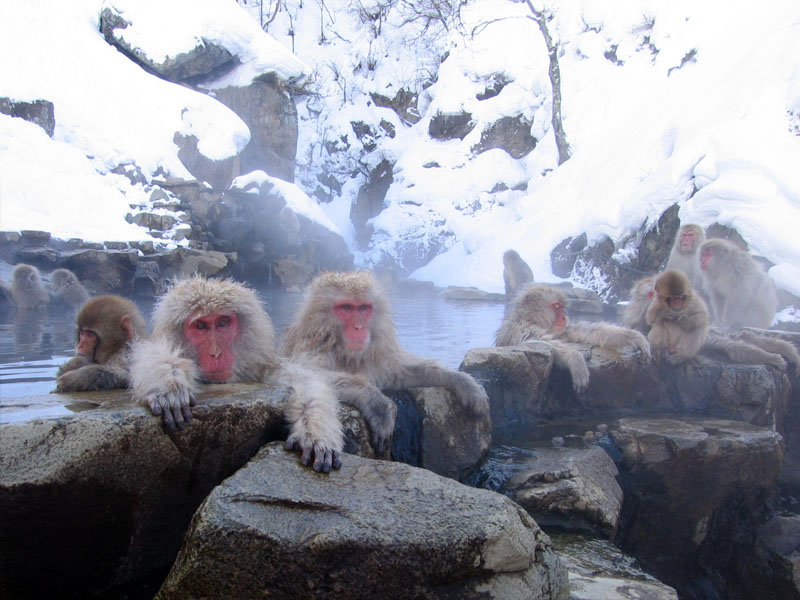
Japanese Macaques, by: Yosemite on Wikimedia Commons 2005

Japanese Macaque, by: Bukk on Wikimedia Commons 2010
This is the full article on them: http://en.wikipedia.org/wiki/Snow_monkey
Japanese Macaques, by: Yosemite on Wikimedia Commons 2005
Japanese Macaque, by: Bukk on Wikimedia Commons 2010
This is the full article on them: http://en.wikipedia.org/wiki/Snow_monkey
Another somewhat remote place:
Billings, MT:
(That hotel looks like it needs a power-wash or something)

Billings skyline, by: Pruhter on Wikimedia Commons 2008

Downtown Billings, MT, by: Ron Rehring
on Wikimedia Commons 2007
(That hotel looks like it needs a power-wash or something)

Billings skyline, by: Pruhter on Wikimedia Commons 2008

Downtown Billings, MT, by: Ron Rehring
on Wikimedia Commons 2007
Subscribe to:
Posts (Atom)